Chandler residential architecture features specific vulnerabilities that desert rodents exploit year-round. In neighborhoods like Ocotillo and Fulton Ranch, dense citrus landscaping and man-made community water…
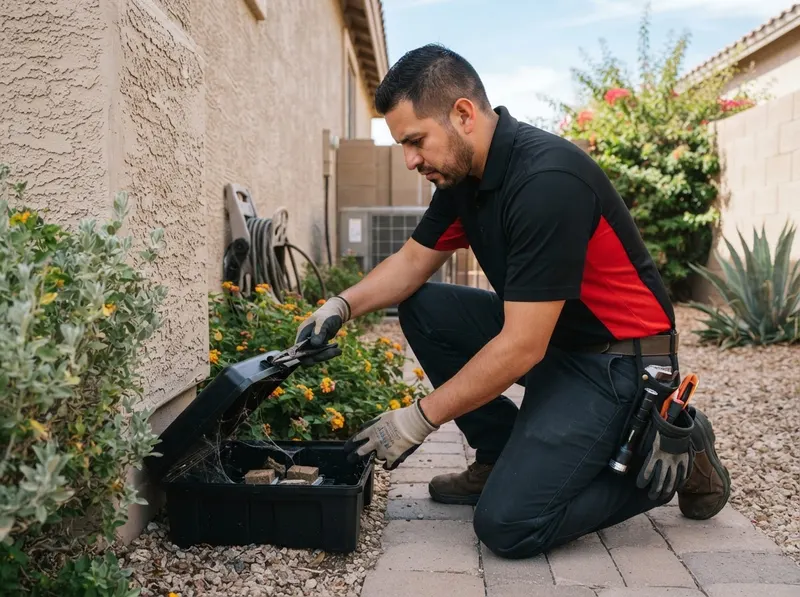
Chandler residential architecture features specific vulnerabilities that desert rodents exploit year-round. In neighborhoods like Ocotillo and Fulton Ranch, dense citrus landscaping and man-made community water features create elevated foraging corridors for roof rats. These pests travel along block wall perimeters and overhead utility lines, slipping through open roof tile voids, unstuffed lead jacks, or unsealed HVAC line chases. Further south near Circle G at Riggs Homestead and Sun Groves, open desert agricultural edges drive native pack rats and house mice directly into garage perimeters and foundation weep screeds seeking shelter from extreme summer heat or winter cold snaps.
Effective defense requires structural remediation rather than temporary bait placements. Broad-spectrum anticoagulant blocks tossed loosely into attics create secondary poisoning risks for neighborhood pets and frequently result in rodents perishing within drywall cavities, generating severe odor issues. The methodical standard relies on full physical exclusion using 1/4-inch galvanized hardware mesh, concrete mortar patches, and metal escutcheon plates across every gap measuring 1/4 inch or larger. In developments such as Carino Estates, Clemente Ranch, and Cooper Commons, sealing ground-level weep screeds prevents initial wall void access, while mechanical snap traps inside tamper-resistant stations rapidly clear active interior populations.
Decision guidance depends on current structural evidence. If scratching sounds occur inside ceiling drywall at night or hollowed citrus rinds appear along fence lines, interior trapping paired with an entry-point barrier is necessary. When structural entry remains unaddressed, rodent populations replenish from neighboring irrigation corridors within 30 to 60 days. The operational trade-off centers on upfront repair versus recurring trapping: physical exclusion carries a higher initial investment starting at $450 to $1,200, but eliminates the continuous monthly cost and rodenticide reliance of ongoing subscription trapping programs.
Every job gets a firm, written price after a free on-site visit.
Tell us about your rodent control job in Chandler and we'll send a clear, written quote, usually the same day.
 Desert Sparrow Pest Control