Desert ant colonies in Maricopa County behave differently than temperate species due to extreme surface heat and dry soil conditions. During peak summer temperatures exceeding 105 degrees Fahrenheit, southern fire ants…
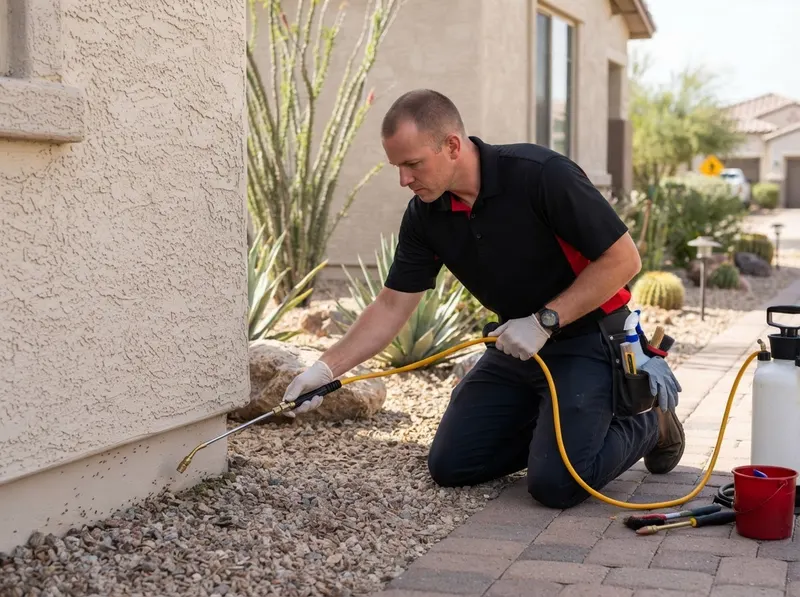
Desert ant colonies in Maricopa County behave differently than temperate species due to extreme surface heat and dry soil conditions. During peak summer temperatures exceeding 105 degrees Fahrenheit, southern fire ants and tiny rover ants abandon parched desert soil and follow subterranean moisture gradients directly toward residential irrigation lines, hose bibbs, and kitchen sink plumbing traps. Properties throughout Ocotillo, Fulton Ranch, and Andersen Springs frequently encounter foraging columns trailing through stucco weep screeds and entering behind baseboards. Retail store aerosol sprays often cause colony budding, where queen ants sense repellent chemicals and disperse into separate sub-colonies throughout drywall voids. Effective remediation requires slow-acting, non-repellent liquid transfer agents applied to exterior foundation perimeters, allowing worker ants to carry the active ingredient directly to the subterranean brood chambers before mortality occurs.
Selecting the proper treatment protocol depends on the specific ant species and its nesting environment. If foraging trails originate along exterior expansion joints, gravel landscape borders, or the mortar lines of block walls in Sun Groves or Clemente Ranch, a non-repellent liquid barrier creates an undetectable perimeter that neutralizes incoming workers. If colonies are already established within interior subflooring or wall cavities near bathroom wet walls, targeted indoor gel baiting delivers precise insect growth regulators directly to the nest without broadcasting airborne residues across living areas. The operational trade-off centers on treatment speed versus total colony elimination: standard repellent perimeter sprays provide immediate surface knockdown but fail to eradicate hidden queens, whereas transfer-chemistry barriers take 3 to 10 days to achieve full colony collapse but prevent recurrent interior surges.
Every structural defense treatment begins with a physical inspection of ground-to-stucco junctions, patio thresholds, and landscape transition zones. Step 1 involves identifying primary foraging corridors along foundation stems and outdoor block privacy walls. Step 2 applies a non-repellent exterior perimeter barrier reaching up to two feet up the foundation wall and three feet out across the soil or landscape rock. Step 3 places sealed, moisture-stable bait matrices near active interior transit lines, strictly out of reach of household pets. Technicians directly inspect weep screeds and plumbing void access points rather than applying superficial baseboard sprays, ensuring children and sensitive pets remain protected while defensive barriers hold firm across Carino Estates and Fox Crossing properties.
Every job gets a firm, written price after a free on-site visit.
Tell us about your ant control job in Chandler and we'll send a clear, written quote, usually the same day.
 Desert Sparrow Pest Control